Introducing the EVO-X Series

More Than Lumens: Why Beam Pattern Matters in Vehicle Lighting
November 11, 2026
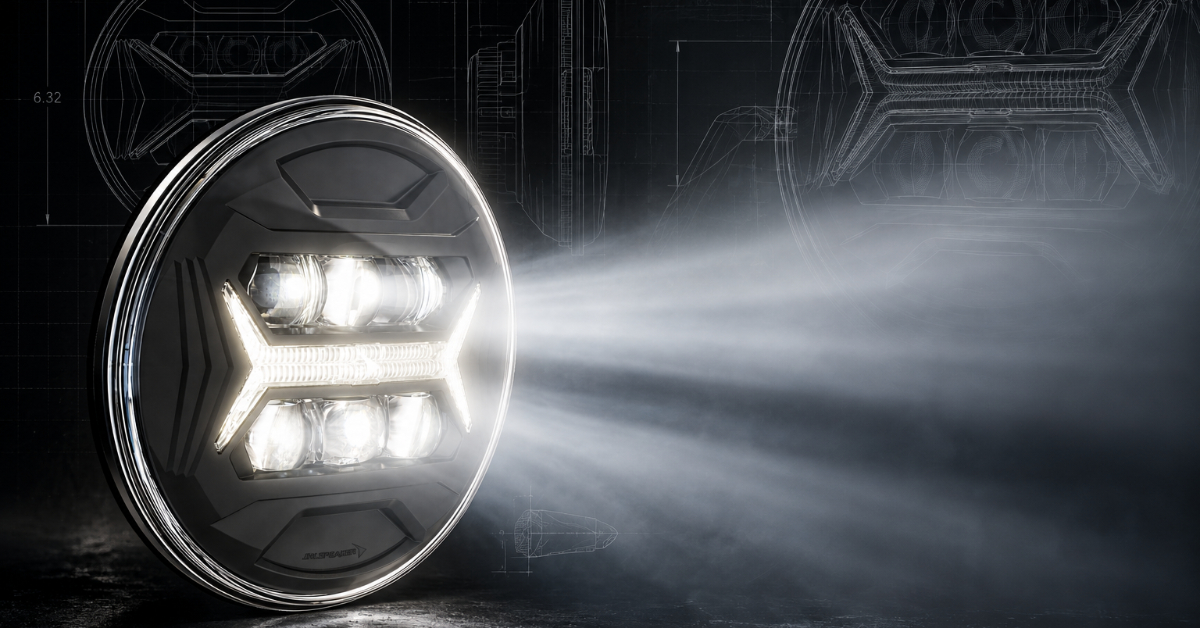
Lumens measure the total amount of light produced by a light source, but they don’t describe how that light is distributed. Beam pattern and optical design determine where the available light goes, making them important factors in real-world vehicle lighting performance.
More Than Lumens: Why Beam Pattern Matters in Vehicle Lighting
When you’re looking at vehicle lighting, lumens are usually one of the first numbers you’ll see. And they are important. Lumens tell you how much light a source produces.
But they don’t tell you what happens to that light after it leaves the LED. That’s where things get more interesting.
A lighting system must take the light produced by the LEDs and put it to work. The optics, lens, reflector, and overall design all affect how much of that output becomes useful light and where it ends up. For headlights especially, that matters. A beam needs to provide consistent coverage in the areas the driver needs to see. More output by itself doesn’t necessarily accomplish that.
Think of lumens like a car’s horsepower. Having a massive amount of power doesn’t help if you have no steering, poor traction, or if the car is pointed at the sky. You can have plenty of light, too, but if you aren’t controlling where it goes, that extra output isn’t doing you much good.
It’s not just about how much light you have. It’s about what you do with it.
Light Output Is Only Part of the Picture
It’s easy to look at a lumen number and assume that a higher number automatically means a better light. In practice, it’s a little more complicated. Lumens measure the total amount of light produced by a source. They don’t tell you how far the light will reach, how wide the spread will be, or what happens to that light once it is directed through the rest of the lamp.
The light coming from the LEDs still has to make its way through the lighting system. Thermal conditions can affect LED output. Light traveling through lenses and optical components also experiences losses. Manufacturing and assembly tolerances can have an effect, too.
So the amount of light produced by the LEDs isn’t necessarily the same as the amount of useful light coming from the finished lamp. That’s one reason we look at raw lumens and effective lumens differently.
Raw Lumens vs. Effective Lumens
Raw lumens are based on the theoretical output of the LEDs in a lamp. Effective lumens take electrical and real-world losses into account, including thermal, optical, and assembly losses. J.W. Speaker considers effective lumens a better representation of the useful visible light actually produced by the finished lamp.
Thermal management is part of that equation. LEDs produce less light as they get hotter, and operating temperature can change as a lamp runs. That’s one reason vehicle lighting specifications may measure performance after the lamp reaches a stable operating temperature rather than relying only on the LED’s theoretical maximum.
There are optical losses, too. As light passes through a lens and other optical components, some of its intensity is lost along the way. It’s a good reminder that the lumen number attached to an LED isn’t necessarily the number of lumens that will end up illuminating the road.
Where the Light Goes Matters
Once you get past the total output, you get to the part that really affects what the driver sees: light distribution.
A beam pattern determines how the available light is spread and controlled. For a headlight, that can mean the difference between a smooth, consistent pattern and one with noticeable bright spots or darker areas.
A high-lumen light with a poor optical design can put a lot of light into one bright center spot while leaving darker gaps around it. That’s not especially useful when you’re trying to see what is happening across the road ahead. A good beam pattern helps spread the available light more evenly instead.
Glare is part of this, too. A headlight can’t just throw light everywhere and call it a day. Controlled angles and cutoffs help keep light where it belongs, rather than putting it into the eyes of an oncoming driver or someone walking along the road. SAE and ECE standards address beam distribution and other requirements for automotive lighting for exactly this reason.
The optical system is what makes that control possible. Depending on the design, that can involve a reflector, lens, or other optical components. The important part is how those pieces work together to direct the light produced by the LEDs.
J.W. Speaker’s engineered optical systems are designed to put the light where it should be, helping drivers see the road ahead.
Designing the Beam Around the Application
Not every lighting application needs the same type of beam. A low beam needs to provide useful road coverage, while a high beam needs to reach farther down the road. Other vehicle lighting applications have their own requirements.
J.W. Speaker’s Dual Burn® technology takes this approach with the EVO-XTM Series, using a broader low-beam spread for road coverage and a high beam designed to provide more punch for distance.
It’s a fairly simple concept, but it’s an important one. The lighting system isn’t just producing light; it’s controlling where that light goes based on what the driver needs from the beam.
EVO-XTM: Putting the Optics to Work
The EVO-XTM Series is built around the idea that the way light is controlled matters just as much as the amount of light being produced. The series uses precision optics and a new X Optic design to help shape and distribute the light, while also giving the headlights their distinctive look.
The LEDs provide the light, but they’re only part of the equation. The optical system has to take that light and put it where it’s useful. That’s what ultimately makes the difference between simply having a lot of light and having light that actually helps you see.
Looking Beyond the Lumen Number
Lumens are still an important part of the picture. They just aren’t the whole picture.
When you’re looking at a vehicle light, it’s worth asking a few other questions, too. How is the beam distributed? What kind of optical system is being used? How does the lamp manage heat? What does the beam actually look like on the road? Are there bright spots or darker areas? How well is glare controlled?
Those things can have a real impact on what the driver sees. A light can have plenty of output, but if that light isn’t distributed well, some of it isn’t doing much to help. That’s why beam pattern and optical design are worth looking at alongside the lumen number. The amount of light matters. So does where you put it.
FAQs
Are more lumens always better for vehicle lighting?
Not necessarily. Lumens measure total light output, but they don’t describe how that light is distributed. Optical design and beam pattern also affect how useful that output is in a vehicle lighting application.
What are raw lumens?
Raw lumens represent the theoretical output of the LEDs in a lamp. They don’t account for losses that occur during actual operation or as light passes through the completed lighting system.
What are effective lumens?
Effective lumens account for real-world losses, including thermal, optical, and assembly losses. They provide a better representation of the useful visible light produced by the finished lamp.
Why is beam pattern important in a headlight?
Beam pattern determines how the available light is distributed in front of the vehicle. A controlled, consistent pattern helps put the available light where it needs to go rather than concentrating it in isolated areas or leaving darker gaps.
How do optics affect beam pattern?
The reflector, lens, and other optical components help control and direct the light produced by the LEDs. Their design affects how the available light is distributed and how the finished beam performs.
How does EVO-XTM approach beam pattern?
EVO-XTM uses precision optics and a new X Optic designed to optimize light distribution. The series also uses Dual Burn® technology, with low-beam spread for road coverage and high-beam punch for distance.
What is Dual Burn® technology?
Dual Burn® is J.W. Speaker’s approach to providing a broader low-beam spread for roadway coverage and more focused high-beam performance for distance.
Get in Touch
Good vehicle lighting takes more than a high lumen number. J.W. Speaker designs lighting systems with the complete application in mind, from the light source and thermal management to the optics and beam pattern.
Looking for a lighting solution for your next application? Contact us to get started.