Introducing the EVO-X Series

Are There Lighting Regulations for Snowplows?
July 30, 2026
Snowplow lighting is regulated, but the requirements aren’t the same everywhere.
All road-going vehicles must comply with federal lighting standards, but snowplow-specific requirements are largely set at the state and local level. What’s acceptable in one state may not fully apply in another.
In practice, operators have to account for both regulation and real winter operating conditions: visibility, buildup, and constant exposure to snow and salt.
The Quick Take: Snowplow Lighting Is About More Than Compliance
When winter weather moves in, visibility changes fast.
Snow, slush, and freezing rain don’t just reduce what the driver can see; they also change what other motorists can see of the truck itself. Add long-night operations, and lighting becomes less of a “check-the-box” requirement and more of an operational necessity. That’s the real reason lighting rules exist.
Compliance is the baseline. But performance in actual storm conditions is what determines whether lighting is doing its job.
A headlamp can be powered on and still be effectively useless if it’s packed with snow or iced over. That’s the gap operators deal with.
Federal Standards Set the Baseline
There isn’t a federal rule written specifically for snowplows. Instead, vehicles operating on public roads fall under Federal Motor Vehicle Safety Standard (FMVSS) No. 108 (49 CFR 571.108).
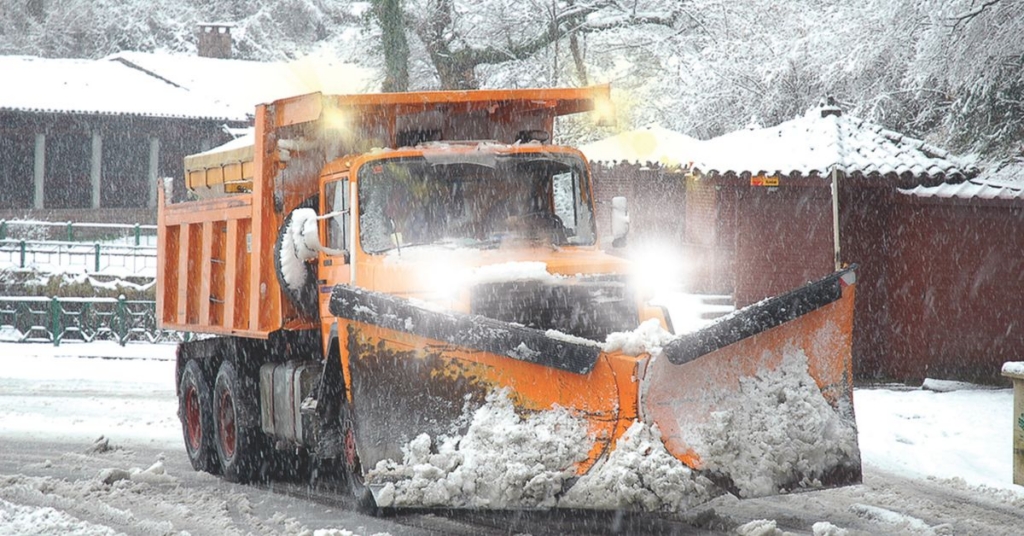
One practical requirement that matters most in snowplow applications: mounted equipment can’t block required lighting. So, if a plow frame or blade obscures factory headlights, additional or relocated lighting may be needed to maintain compliance and usable forward visibility.
At a high level, the intent is simple: make sure the driver can see ahead, and the vehicle remains visible to everyone else on the road.
State and Local Requirements Can Be Different
Federal standards define the baseline, but most snowplow-specific rules show up at the state or municipal level.
In many regions, flashing amber warning lights are required whenever a snowplow is actively working on public roads. Beyond that, requirements can vary quite a bit.
Local agencies may define:
- warning light color
- mounting height and location
- visibility angles
- when lights must be active
Some municipalities are very specific about 360-degree visibility while plowing through intersections or residential areas.
Before outfitting a vehicle or fleet, it’s worth checking the actual operating jurisdiction, not just assuming requirements are consistent statewide.
Winter Creates Challenges Traditional Lighting Wasn’t Built For
Even when a system meets every regulation, winter introduces problems that regulations don’t really account for.
Snow doesn’t fall evenly. It sticks. It builds up around housings, edges, and lenses. Ice forms, melts slightly, then refreezes. Over time, even a bright light can become partially blocked without ever failing electrically.
LEDs deliver higher output, better efficiency, and longer life than halogen systems, but they also generate less heat at the lens. That’s good for durability, but it also means less natural melt-off.
Snow and ice can accumulate even while the light is operating normally. Output doesn’t fail; it just gets physically obscured.
Choosing Lighting Designed for Snowplow Applications
Snowplow duty is not light-duty cycling. It’s vibration, salt spray, freeze-thaw cycles, and long continuous operation in low visibility. Lighting systems need to be built with that reality in mind.
Purpose-built LED snowplow headlights, like J.W. Speaker’s Model 9800 HS, are engineered specifically for snowplow applications, delivering controlled beam patterns that remain effective during long winter operations. Pairing those headlights with heated LED taillights helps reduce snow and ice buildup on rear lighting while warning lights keep the vehicle visible to surrounding traffic.
Together, the system has to work for an entire shift, not just the first 20 minutes before buildup starts.
Built for Winter Conditions
Snowplows don’t get to sit idly waiting for better weather. They’re expected to keep working through freezing rain, packed snow, road salt, and long overnight shifts.
That’s why durability matters just as much as light output. Lighting systems need to handle constant vibration, repeated freeze-thaw cycles, and the abuse that comes with winter road maintenance without becoming another maintenance item. Features like sealed housings and SmartHeat® technology help keep lights working as intended.
The real test isn’t how a light performs in perfect conditions. It’s how it performs halfway through a long shift when the weather hasn’t let up.
Why J.W. Speaker Lighting Is Built for the Job
For decades, J.W. Speaker has developed lighting for vehicles that perform in demanding environments, from municipal snowplows and commercial trucks to specialty equipment operating in every kind of weather.
That experience shapes how we approach product design. Every light is engineered with the realities of the job in mind: dependable visibility, durable construction, and performance that holds up through long hours, rough roads, and harsh winter conditions.
Because when a storm rolls in, operators shouldn’t have to wonder whether their lighting is up to the task.
Frequently Asked Questions
Are snowplow lights required by law?
Yes. Snowplows operating on public roads must meet federal lighting standards, and most states add additional requirements for warning lights and visibility equipment.
Do snowplows need amber warning lights?
In many states, yes. Flashing amber lights are commonly required while actively plowing, though exact rules vary by jurisdiction.
Why do snowplows use LED lighting?
LEDs offer higher brightness, lower power draw, longer service life, and better durability in vibration-heavy environments.
Why do LED snowplow lights ice over?
LEDs produce less heat at the lens surface, so snow and ice can accumulate even while the light is functioning normally.
How do heated LED lights help?
Heated systems actively reduce snow and ice buildup on the lens, helping maintain consistent output during winter operation.
Get in Touch
Meeting regulations is only part of the equation. The real challenge is keeping lighting functional in snow, ice, freezing rain, and low visibility hour after hour, storm after storm.
Explore J.W. Speaker snowplow lighting solutions or contact the team to find the right setup for your application.